
Liquidity
Convert future and uncertain cash flows into a defined purchase consideration.
PORTFOLIO ACQUISITIONS
TF DebtInvest evaluates acquisitions of NPL portfolios and other overdue receivables. Strong underlying data supports deeper analysis and more precise indicative valuation.
Selling debt portfolios can release liquidity, reduce exposure to future credit losses and save time and internal resources.
WHY SELL?
A portfolio sale can release capital, reduce administration and move part of the recovery risk away from the seller’s core business.
Convert future and uncertain cash flows into a defined purchase consideration.
Reduce exposure to future recovery costs, long collection horizons and variable collection outcomes.
Reduce internal monitoring and administration of aged or overdue receivables.
Consideration may be structured using upfront payment, DPP, Earn-Out or another agreed payment structure.
WHO WE BUY FROM
This may include credit institutions, telecom operators, utilities, service companies and other businesses with overdue customer receivables.
PROCESS
Each stage builds on the previous analysis. The aim is to create a clear decision basis, verify critical assumptions and execute the transaction in a structured manner.
Share a portfolio summary, data tape and relevant supporting documentation.
We analyse claim-level data, debtor profile, payment history, legal status, servicing and cost structure.
We develop an initial pricing view and identify the assumptions that need to be verified.
Selected data points, agreements, transferability and supporting documentation are verified.
Once the information is sufficient, a binding offer or clearly defined transaction proposal may be provided.
Agreements, payment, data transfer and handover to the relevant servicing structure are completed.
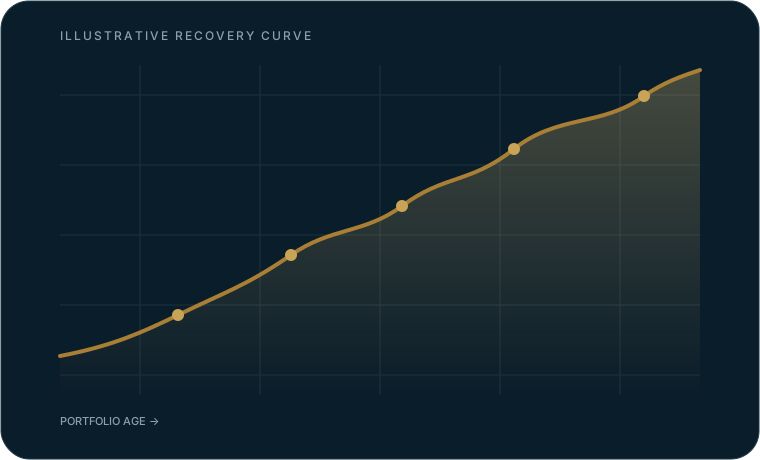
FROM CREDIT LOSS TO LIQUIDITY
The economic outcome depends on portfolio quality, documentation, legal status and the purchase consideration that can be agreed.
VALUATION
We can start with a portfolio summary, but detailed claim- and debtor-level data generally provides a stronger basis for recovery modelling, cash-flow analysis and indicative purchase price.
Where material contains personal data or other sensitive information, it should be transferred and processed using appropriate technical and organisational safeguards.
FAQ
We evaluate NPL portfolios, consumer and commercial receivables, telecom and utility receivables and other overdue or distressed claims. Exact scope depends on jurisdiction, documentation, data quality and servicing availability.
Pricing is based on expected portfolio cash flow and risk. We consider balances, age, payment history, debtor data, legal status, documentation quality, recovery expectations, time to cash flow and servicing/legal costs.
Detailed claim- and debtor-level data generally provides a stronger basis for analysis and more precise indicative pricing. Sensitive information should be transferred and processed using appropriate security measures.
Yes. Depending on the portfolio and transaction, consideration may include upfront payment, Deferred Purchase Price (DPP), Earn-Out or another flexible payment structure.
The portfolio is transferred under the transaction agreement and managed through an appropriate servicing structure, with performance, reporting and compliance monitored thereafter.
PORTFOLIO DATA
The stronger the underlying data, the better we can assess the portfolio’s recovery profile, risk and indicative pricing.
Portfolio data may contain personal data and other protected information. A secure transfer method can therefore be agreed before a full data tape is provided.